About the company
CYPRUS AUTOMATION is an engineering company dedicated to xenon‑129 hyperpolarization and low‑field NMR instrumentation for research and clinical‑scale applications.[web:2][web:5]
Focus on Xe‑129 hyperpolarization
The team builds batch‑mode spin‑exchange optical pumping (SEOP) hyperpolarizers and supporting quality‑control tools for hyperpolarized xenon‑129 production.[web:5][web:22]
Integrated low‑field NMR spectrometers
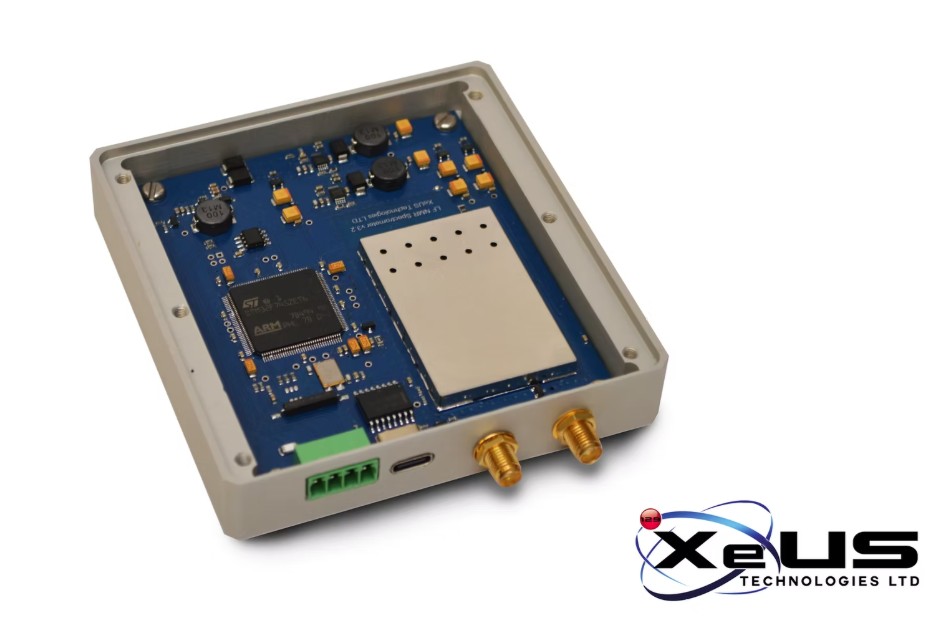
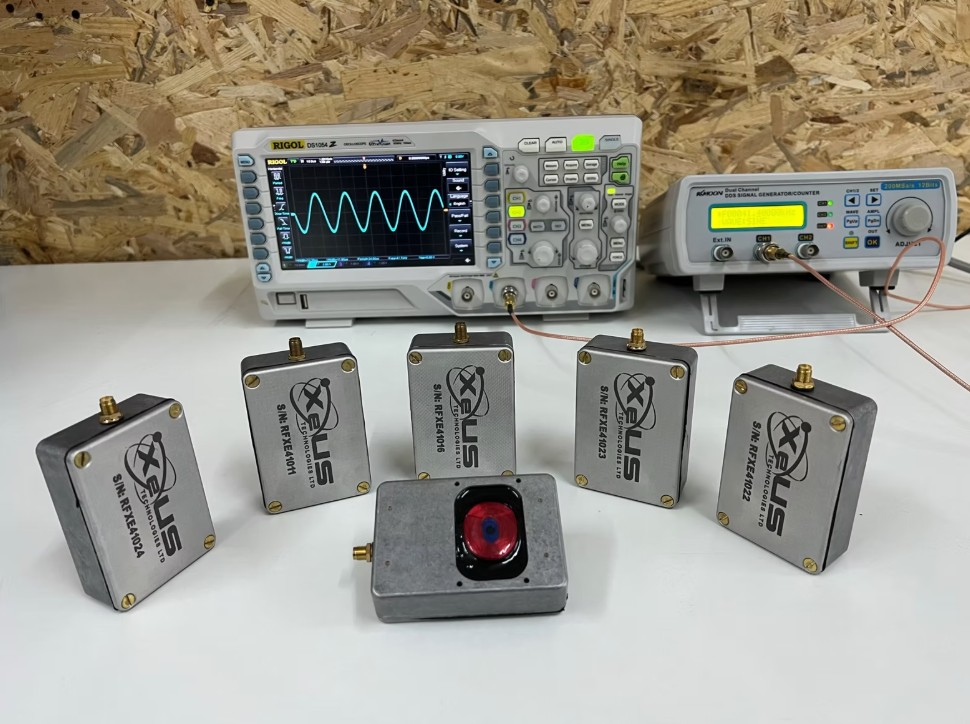
Compact low‑frequency NMR spectrometers are developed for polarimetry and relaxation measurements of hyperpolarized gases and contrast agents in the 1–125 kHz range.[web:2][web:5][web:47]
Custom, experiment‑driven devices
Systems are tailored to specific experimental protocols, from basic research setups to clinical‑scale Xe‑129 production and OEM modules for integration into larger platforms.[web:2][web:5]
Solution areas
The company covers the full development cycle — from system architecture and electronics to embedded firmware, control software, and on‑site commissioning.[web:2][web:5]

LF NMR spectrometers for polarimetry
Ultra‑low‑field, pulse‑and‑acquire NMR spectrometers optimized for in‑situ polarimetry of hyperpolarized Xe‑129 and other nuclei in SEOP hyperpolarizer setups.[web:2][web:5][web:47]
- Pulse‑and‑acquire operation for polarimetry and relaxation measurements.[web:2][web:5]
- Integration with NMR coils, heating jackets, field control, and gas handling modules.[web:2][web:5]
- APIs and software for automated experiments and data export to existing analysis pipelines.[web:2][web:5]
Xenon‑129 hyperpolarization systems
Batch‑mode and stopped‑flow Xe‑129 hyperpolarizers for lung MRI, molecular imaging, and fundamental NMR spectroscopy.[web:22][web:29][web:50]
- SEOP‑based hyperpolarization using high‑power laser pumping.[web:22][web:29]
- Quality assurance and delivery modules for HP Xe‑129 gas for research and clinical studies.[web:29][web:50]
- Adaptation to specific MRI/NMR protocols and integration with imaging centers.[web:20][web:50]
Parahydrogen and auxiliary systems
Parahydrogen generators and gas‑handling modules for PHIP, SABRE, and related MR hyperpolarization experiments.[web:29][web:31]
- Parahydrogen production systems with configurable enrichment levels.[web:29][web:31]
- Distribution and dosing modules for gas delivery to experimental setups.[web:29][web:31]
- Integration with existing NMR/MRI infrastructure and safety systems.[web:29][web:31]
Technical expertise
The team combines experience in NMR physics, laser optics, RF electronics, and embedded control for robust, integrated instruments.[web:2][web:5][web:22]
Hardware platform
- Design of low‑frequency NMR coils, RF front‑ends, and shielded enclosures for LF applications.[web:2][web:5][web:47]
- Magnetic assemblies, gradient coils, and field‑control subsystems for SEOP and polarimetry.[web:5][web:22][web:50]
- ARM STM32‑based embedded control for fully automated hyperpolarizers and spectrometers.[web:5]
Software & automation
- Control software for Xe‑129 hyperpolarizers, low‑field NMR spectrometers, and gas‑handling modules.[web:2][web:5][web:47]
- Tools for acquisition, visualization, and export of NMR data and polarization metrics.[web:2][web:5][web:47]
- Integration with laboratory information systems and existing analysis environments.[web:2][web:5]
Scientific collaboration
- Joint definition of experimental protocols and system requirements with academic and clinical partners.[web:2][web:5][web:20]
- On‑site commissioning, user training, and remote technical support for installed systems.[web:2][web:5][web:20]
- Long‑term service, upgrades, and custom module development for new studies.[web:2][web:5][web:20]
Contact
Share a short outline of your project, and the team will propose an instrument architecture and collaboration format for your lab or imaging center.[web:2][web:5]
Provide a brief description of your application, and CYPRUS AUTOMATION will follow up to discuss technical requirements.